
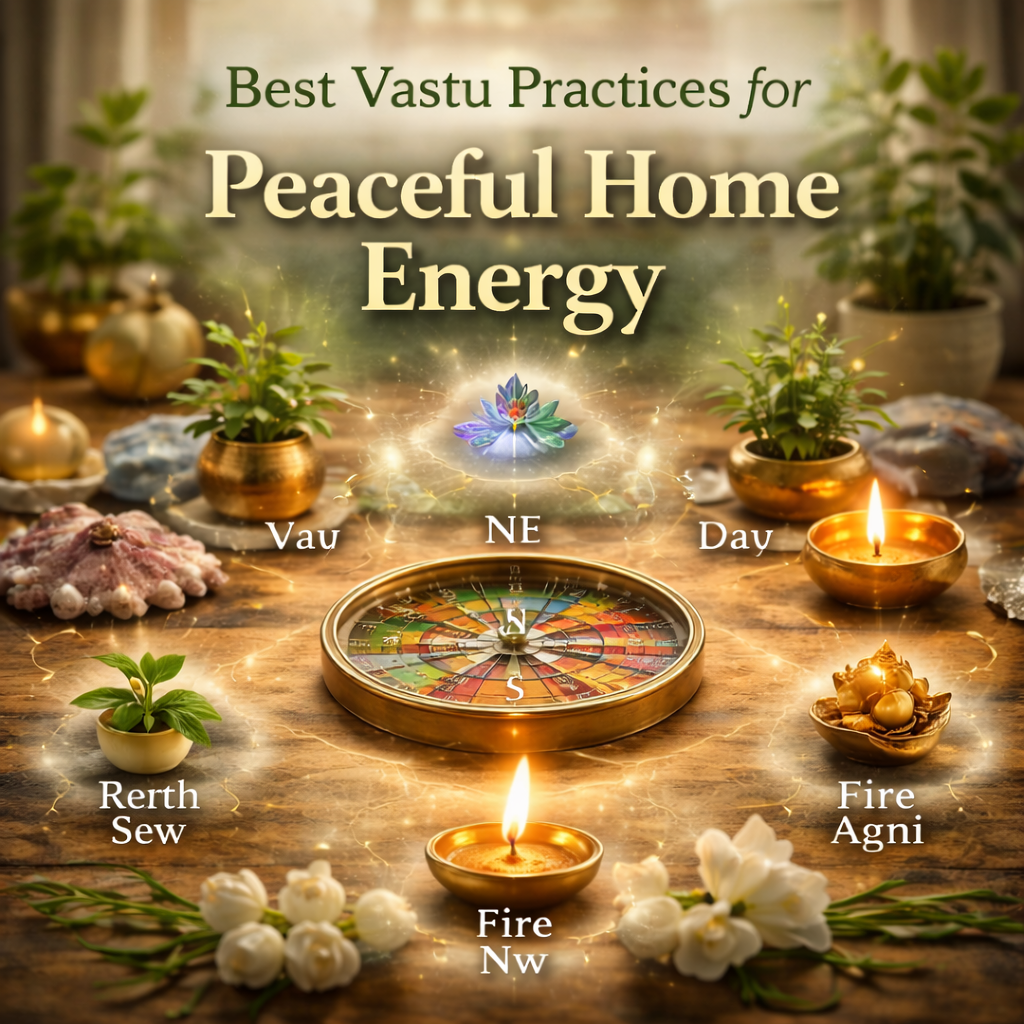
Best Vastu Practices for Peaceful Home Energy
How Directions and Elements Enhance Well-Being (Indian Perspective)
In Indian culture, a home is not just a place to live—it is a living energy space where emotions, health, relationships, and prosperity are nurtured. Vastu Shastra, an ancient Indian science, explains how the five elements (Panchatatva) and directions (Disha) influence the flow of energy within a home.
When these energies are balanced, the home naturally supports peace, harmony, and emotional well-being.
This blog explains the best Vastu practices for a peaceful home, and why certain directions and elements work—based on Indian wisdom.
What Is Peaceful Home Energy According to Vastu?
A peaceful home is one where prana (life force) flows freely without obstruction. According to Vastu, peace arises when:
- Elements are in balance
- Directions are respected
- Spaces are clean and aligned
- Natural forces support daily life
Disturbance in any of these creates stress, restlessness, or conflict.
The Five Elements (Panchatatva) and Their Role
Indian Vastu is based on balancing five elements:
| Element | Represents | Impact on Home |
|---|---|---|
| Earth (Prithvi) | Stability | Emotional grounding |
| Water (Jal) | Flow | Calmness, prosperity |
| Fire (Agni) | Energy | Motivation, digestion |
| Air (Vayu) | Movement | Mental clarity |
| Space (Akash) | Expansion | Peace and openness |
A peaceful home requires none of these to dominate or weaken.
1. North-East (Ishan Kon) — The Zone of Peace & Clarity
Why It Matters:
In Indian Vastu, the North-East is the most sacred direction, associated with:
- Water element
- Wisdom and clarity
- Spiritual energy
Best Practices:
- Keep this area light, clean, and open
- Ideal for prayer room or meditation
- Avoid toilets, heavy furniture, or clutter
A balanced North-East promotes mental peace and emotional stability.
2. East Direction — Health and Positive Beginnings
Why It Matters:
The East is ruled by the Sun, which represents life force and vitality.
Best Practices:
- Allow morning sunlight into the home
- Windows or balconies in the East are beneficial
- Use light shades like white, light yellow, or green
Sunlight purifies energy and uplifts mood—an age-old Indian belief backed by Vastu.
3. Kitchen in South-East — Balance of Fire Element
Why It Matters:
The South-East is governed by Agni (fire).
Best Practices:
- Place kitchen in South-East
- Avoid water elements near the stove
- Use warm colours like peach or light red
When fire is balanced, it supports health, digestion, and family harmony.
4. Bedroom Vastu for Mental Calm
Ideal Direction:
- South-West bedroom for stability and restful sleep
Avoid:
- Sleeping with head towards North
- Mirrors reflecting the bed
South-West represents earth energy, which calms the mind and stabilizes emotions.
5. Living Room Vastu for Harmony
Best Practices:
- Keep living room clutter-free
- Seating arrangement facing East or North
- Balanced lighting—avoid harsh lights
A harmonious living room reduces arguments and promotes family bonding.
6. Importance of Open Space and Cleanliness
Indian Perspective:
Cleanliness is considered sattvic (pure) in Indian philosophy.
Vastu View:
- Clutter blocks energy flow
- Broken items hold stagnant energy
- Open spaces allow prana circulation
Regular cleaning is one of the simplest Vastu remedies.
7. Water Placement for Calmness
Ideal Zones:
- North or North-East for water elements
Avoid:
- Water in South-West
- Leaking taps (symbol of emotional and financial loss)
Balanced water elements soothe emotions and reduce anxiety.
8. Colours That Promote Peace (As Per Vastu)
Recommended Colours:
- White – purity and calm
- Light blue – emotional balance
- Green – healing and harmony
Avoid excessive dark colours, especially in bedrooms and prayer areas.
Common Vastu Mistakes Disturbing Peace
- Toilets in North-East
- Heavy storage in East or North
- Poor ventilation
- Ignoring natural light
Correcting these brings noticeable calmness.
How Long Does Vastu Take to Show Results?
For peaceful energy:
- Small corrections: 2–4 weeks
- Directional balance: 1–2 months
- Long-term harmony: sustained with consistency
Vastu works subtly but deeply.
Final Thoughts
From an Indian perspective, peace at home is not accidental—it is created through alignment with nature. Vastu does not demand perfection, only awareness and balance.
When directions and elements are respected, the home becomes a source of comfort, stability, and inner peace.
At MysticEnerge, we believe peace begins where energy flows right.